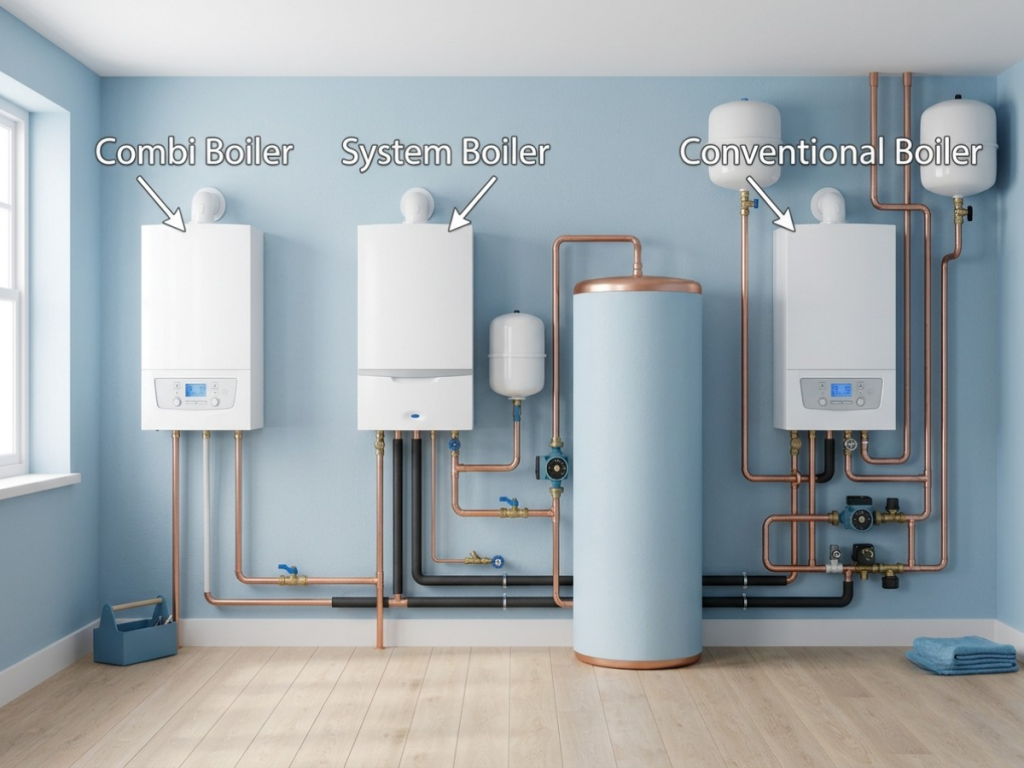
The short answer: most UK homes with one or two bathrooms are best served by a combi boiler, while larger homes with several bathrooms and high hot water demand suit a system boiler. A conventional (heat-only) boiler now mainly suits older properties that want to keep their existing setup. Choosing between a combi vs system boiler comes down to four things: bathrooms, mains water pressure, available space, and plans for renewables. This guide covers all three types and helps you decide which boiler suits your home best.
The Three Types Of Boiler Explained
UK homes have three main boiler types, each producing hot water differently.
- Combi boiler: heats water on demand straight from the mains, with no tank or cylinder.
- System boiler: heats water and stores it in an insulated cylinder at mains pressure.
- Conventional boiler: uses a cylinder plus a cold water tank and expansion tank, usually in the loft.
What Is A Combi Boiler?
A combi (combination) boiler is the most common choice in the UK. It handles heating and hot water from a single compact unit, with no separate cylinder to house.
Because it heats water only when you need it, a combi is efficient and space-saving. The trade-off is that it can struggle when two taps run at once, and performance depends on your mains pressure. Best for: flats, terraced houses and homes with one bathroom. See the models we fit in our range of A-rated boilers.
What Is A System Boiler?
A system boiler also heats your home and water, but stores it in an insulated cylinder rather than heating on demand. Key parts such as the pump and valves are built into the boiler itself.
This gives a steady supply to several taps at once, which combi boilers cannot always match. You need room for the cylinder, usually in an airing cupboard, but there is no loft tank. Best for: homes with two or more bathrooms and good mains pressure.
What Is A Conventional (Heat Only) Boiler?
A conventional boiler, also called a regular or heat-only boiler, is the traditional setup found in many older homes. It uses a hot water cylinder, a cold water storage tank, and an expansion tank in the loft.
It delivers plenty of hot water and suits homes with lower mains pressure or older pipework. The downsides are the space it needs and the heat lost from stored water. We rarely fit new conventional systems from scratch, but they remain a sensible like-for-like swap in the right property.
Combi Vs System Vs Conventional Boiler: Side By Side Comparison
Here is how the three types compare across the factors that matter most.
| Feature | Combi | System | Conventional |
| Hot water | On demand from mains | Stored in cylinder | Stored in cylinder |
| Best home size | Small to medium | Medium to large | Large or older |
| Bathrooms | 1 to 2 | 2 or more | 2 or more |
| Space needed | Minimal | Cylinder only | Cylinder plus loft tanks |
| Water pressure | Mains pressure | High, mains pressure | Lower, tank fed |
| Efficiency | Highest | High | Lowest of the three |
| Renewables ready | Needs cylinder added | Cylinder present | Cylinder present |
Which Boiler Is Best For My Home?
The right choice depends on how your household uses hot water. This guide points most homes in the right direction.
- One bathroom flat or terrace: a combi boiler is almost always the best fit.
- Two or more bathrooms with good pressure: choose a system boiler for reliable simultaneous use.
- Older home with low pressure or existing tanks: a conventional or system boiler works better than a combi.
- Planning a heat pump later: keep or add a cylinder, since heat pumps rely on stored hot water.
Running Costs And Efficiency
Every new boiler sold in the UK must be A-rated, meaning at least 92% efficient, so the type matters less than it once did. A combi tends to cost the least to run because it only heats the water you use, while stored water systems lose some heat from the cylinder.
Correct sizing matters more than the label. An oversized or undersized boiler wastes money, whatever the type, so a proper survey is essential. For a full breakdown of prices, read our guide to boiler replacement cost.
Get The Right Boiler Fitted By Local Experts
Not sure which boiler is right for your home? Prime Time Boilers has been fitting combi, system, and conventional boilers since 2010, backed by up to a 12-year warranty. We provide boiler installation and replacement across Essex, including Chelmsford, Colchester, Romford and Basildon. Book a free survey and our Gas Safe engineers will recommend the right boiler for your home. Get an instant quote today.
Frequently Asked Questions
Which Is Better, A Combi Or System Boiler?
Neither is better overall; it depends on your home. A combi boiler suits most properties with one or two bathrooms thanks to its efficiency and compact size. A system boiler suits larger homes with several bathrooms, where stored hot water keeps pressure steady when more than one outlet runs at once.
Can I Replace A Conventional Boiler With A Combi?
Yes, and it is a common upgrade. Switching from a conventional to a combi boiler means removing the cylinder and loft tanks, which frees up space. It involves extra pipework and sometimes relocating the boiler, so it costs more than a like-for-like swap, but many homeowners value the reclaimed room.
Do I Need A System Boiler For Two Bathrooms?
Not always. A powerful combi boiler can serve two bathrooms in some homes, but if both showers run at the same time, you may notice a drop in flow. For reliable simultaneous hot water across two or more bathrooms, a system boiler with a cylinder is the safer choice.
Which Boiler Is Best For A Heat Pump Or Future Renewables?
Systems that use a hot water cylinder, meaning system and conventional boilers, are easier to pair with a heat pump later, because heat pumps rely on stored hot water. If you choose a combi now but expect to go greener, plan space for a cylinder so the switch is simpler down the line.
How Much Does A New Boiler Cost To Install?
Most boiler installations in the UK range from around £9.99 to £4,000 fully fitted, depending on the type, brand and complexity. Combi swaps sit at the lower end, while conversions and system boilers with cylinders cost more. A free survey gives you an accurate, fixed price for your specific home.